Overview
A look at Korean history across the Three Kingdoms period and the Joseon Dynasty.
Overview
For roughly 700 years three kingdoms fought for control of the peninsula. Goguryeo held the north. Baekje dominated the southwest. Silla rose in the southeast and eventually outlasted both rivals. Silla finally unified the peninsula in 676 CE after a long alliance with Tang China.
The Korean Peninsula has been inhabited for a long time. The earliest known pottery dates to around 8000 BC. The Neolithic period followed, then the Bronze Age by 2000 BC and the Iron Age around 700 BC. The Paleolithic people are not thought to be direct ancestors of modern Koreans — that lineage is traced to the Neolithic people of around 2000 BC.
Korean Peninsula Location
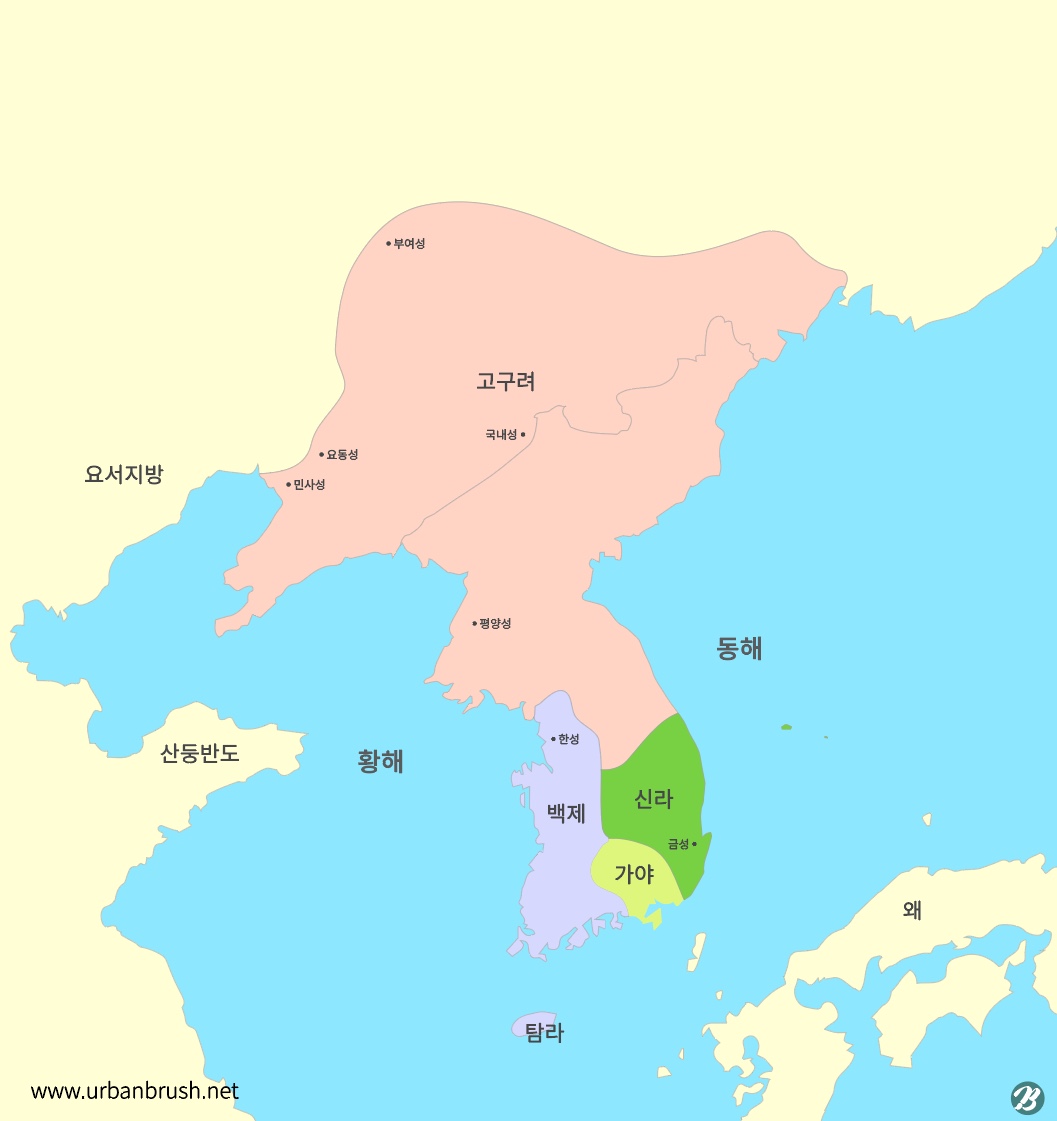
The Korean Peninsula sits between China to the north and Japan to the southeast. That position meant Korea was always at the center of trade and conflict in the region — for better or worse.
Key Periods at a Glance
Goguryeo, Baekje and Silla fight for control of the peninsula. Buddhism spreads. Art and government both grow quickly.
Silla drives out the Tang forces and unifies most of the peninsula. Buddhist culture and overseas trade both flourish.
Wang Geon founds Goryeo and gives the country its modern name. The dynasty survives Mongol invasions and produces Goryeo celadon and the Tripitaka Koreana.
A Confucian state that lasted 500 years. Home to Sejong the Great, Hangul and Admiral Yi Sun-sin.
Religion & Culture
Buddhism came to Goguryeo from China in 372 CE and spread quickly to the other kingdoms. Each one took to it in its own way:
- Goguryeo used Buddhism to reinforce royal power and painted grand murals in royal tombs. Those murals are still some of the best surviving images of ancient Korean daily life.
- Baekje sent Buddhist monks, texts and craftsmen to Japan. That knowledge shaped early Japanese culture in lasting ways.
- Silla built major temples like Hwangnyongsa (황룡사) and Bulguksa (불국사). Queens like Seondeok used Buddhist patronage to demonstrate their right to rule.
Confucianism existed alongside Buddhism and slowly gained influence — especially in government and education. By the Joseon era it had taken over as the official state philosophy.
Royal Authority
In all three kingdoms the king held the top position but how much real power that meant varied a lot. Kings backed their authority through military force, religion and control over land. Over time each kingdom pulled more power toward the center and away from regional clans.
- Goguryeo kings used the title Taewang (大王, "Great King") — a step above ordinary "king" and a clear signal of imperial ambition. You can read it on the Gwanggaeto Stele.
- Baekje kings copied Chinese-style titles and borrowed Confucian government models from across the Yellow Sea.
- Silla kings were backed by the bone rank system (골품제, golpumje) which tied political power to blood. Only someone of "sacred bone" (성골) status could actually become king.
Noble Influence & Aristocratic Systems
Below the king sat the hereditary noble families. They controlled armies, provinces and court offices. They were the practical backbone of every government:
- Goguryeo had five powerful regional clans (五部, obul) working alongside officials the king appointed. The senior ministers formed councils that advised the king — and sometimes blocked him.
- Baekje was run by eight great noble families (八姓, palsŏng) who held all the top positions. The royal Buyeo clan sat at the top of that hierarchy.
- Silla had the strictest system of all. The bone rank assigned every aristocrat a hereditary rank that decided which offices they could hold and even what kind of house they could build. The Hwarang (화랑) were elite young warriors from noble families who trained together and later became the kingdom's military and political leaders.
Bureaucracy & Law
As each kingdom grew they built proper administrative systems, mostly taking inspiration from China:
- Written law codes appeared in all three kingdoms by the 4th–5th centuries CE, standardizing punishments and property rights.
- Government ministries each handled specific areas: military affairs, taxation, ritual and public works.
- Silla had a Council of Nobles (화백, hwabaek) where senior aristocrats had to reach full consensus to make decisions. That was unusual for the time.
The Joseon Dynasty rebuilt the whole system around Neo-Confucian principles. Six ministries handled Personnel, Taxation, Rites, Military, Justice and Public Works. Officials got their positions through the civil service exam (과거, gwageo) — open to yangban men and supposed to be based on merit.
Joseon: The Confucian State
Joseon was founded as a deliberate break from Goryeo, which its founders thought was too heavily Buddhist. The result was one of the most detailed and long-lasting government structures in East Asian history:
- The King sat at the top but was expected to govern alongside the State Council (의정부, Uijeongbu) — three chief ministers representing Left, Right and Center.
- The Six Ministries (육조) handled Personnel, Taxation, Rites, Military Affairs, Justice and Public Works — each running its own branch under the king.
- Censorate (사헌부 & 사간원) — two independent agencies that could criticize the king, investigate officials and call out bad behavior. Even the king could be publicly rebuked.
- The Gwageo Examination — a multi-stage test covering Confucian texts, history and policy writing. Pass it and you got a government job. The exam system shaped Korean intellectual life for 500 years.
- Local Administration — the peninsula was split into eight provinces (팔도) each with an appointed governor and further divided into counties run by local magistrates (수령).
Agricultural Foundation
Farming was the foundation of every Korean economy. Wet-rice cultivation came from China and became the main food source across the peninsula. Reservoirs, canals and terraced paddy fields were all government investments. Land was power — kings gave it to loyal nobles and taxed the harvest to fund the state.
- Goguryeo leaned more on millet, barley and hunting because of its colder northern climate. Tribute from conquered peoples also filled the coffers.
- Baekje had the Honam plain — some of the best farmland on the peninsula. That made Baekje relatively wealthy and gave it the resources for cultural development.
- Silla grew its agricultural base a lot during unification by taking over the fertile lands of Baekje and Goguryeo.
Craft Production & Specialization
Beyond farming, the Three Kingdoms made specialized goods for domestic use and export:
- Metalwork — Iron was essential for weapons and farming tools. Silla gold crowns and Baekje bronze pieces stand out as the best decorative metalwork of the period.
- Ceramics — Stoneware developed steadily and peaked with Goryeo celadon (청자) — famous across Asia for its jade-green glaze. Korean techniques later influenced pottery traditions in China and Japan.
- Silk & Textiles — Silk served as both an export and a form of payment. Korean silk went to Chinese courts as tribute and circulated widely in regional trade.
- Lacquerware & Paper — Baekje was known for refined lacquerware. Monasteries across all three kingdoms made paper and copied books.
Taxation & State Revenue
All three kingdoms taxed their people in grain, cloth and labor. The system changed a lot over time:
- Taxation in the Three Kingdoms was irregular and tied to tribute arrangements between the court and regional lords.
- Unified Silla put in place a more systematic land survey and tax register.
- Goryeo and Joseon both built proper tax codes. Sejong reformed the system so tax was based on how good the harvest actually was that year — fairer for farmers in bad years.
- The Daedongbeop reform (대동법, 1608–1708) replaced complicated local tribute payments with a flat land tax paid in rice. It cut the burden on farmers and reduced corruption.
Currency & Markets
For most of Korean history grain and cloth were the main currency. Actual coins existed but didn't become common until late Joseon:
- The government issued copper coins (상평통보, sangpyeong tongbo) from 1678 and they slowly spread through local markets over the next hundred years.
- Markets (시장, sijang) ran on rotating schedules in designated towns. The five-day market cycle became a fixture of Joseon life and still exists in parts of Korea today.
- Merchant guilds (계, gye) and licensed traders (시전, sijeong) in the capital handled long-distance trade under state oversight.
The Peninsula as a Trade Crossroads
Korea connected the Asian continent to the Japanese archipelago with coasts on both the Yellow Sea and the East Sea. Merchants, diplomats and monks moved through constantly — carrying goods, beliefs and ideas in both directions. Korea wasn't just a place that absorbed outside influence. It sent its own culture outward too, especially toward Japan.
Diplomatic Missions & Envoys
Diplomacy was taken seriously throughout Korean history. Embassies were sent and received with a lot of ceremony:
- Joseon had the most organized diplomatic system, with a dedicated agency (승문원, Seungmunwon) handling correspondence in Chinese, Japanese and Jurchen/Manchu.
- Korean envoys to China (연행사, Yeonhaengsa) went to Beijing and came back with books, scientific instruments and knowledge of Western technology. These trips were one of the main ways Joseon learned about the wider world.
- Japanese missions were received at Dongnae (Busan) under strict protocol. Korean Tongsinsa embassies (통신사) visited the Japanese capital periodically and drew huge crowds wherever they went.
- Relations with the Jurchen people shifted from tribute arrangements to military conflict. The Manchu invasions of 1627 and 1636 forced Joseon to submit to the new Qing Dynasty.